Technical Support
Installation Guide
To ensure maximum lifespan and safety, please follow these installation guidelines carefully.

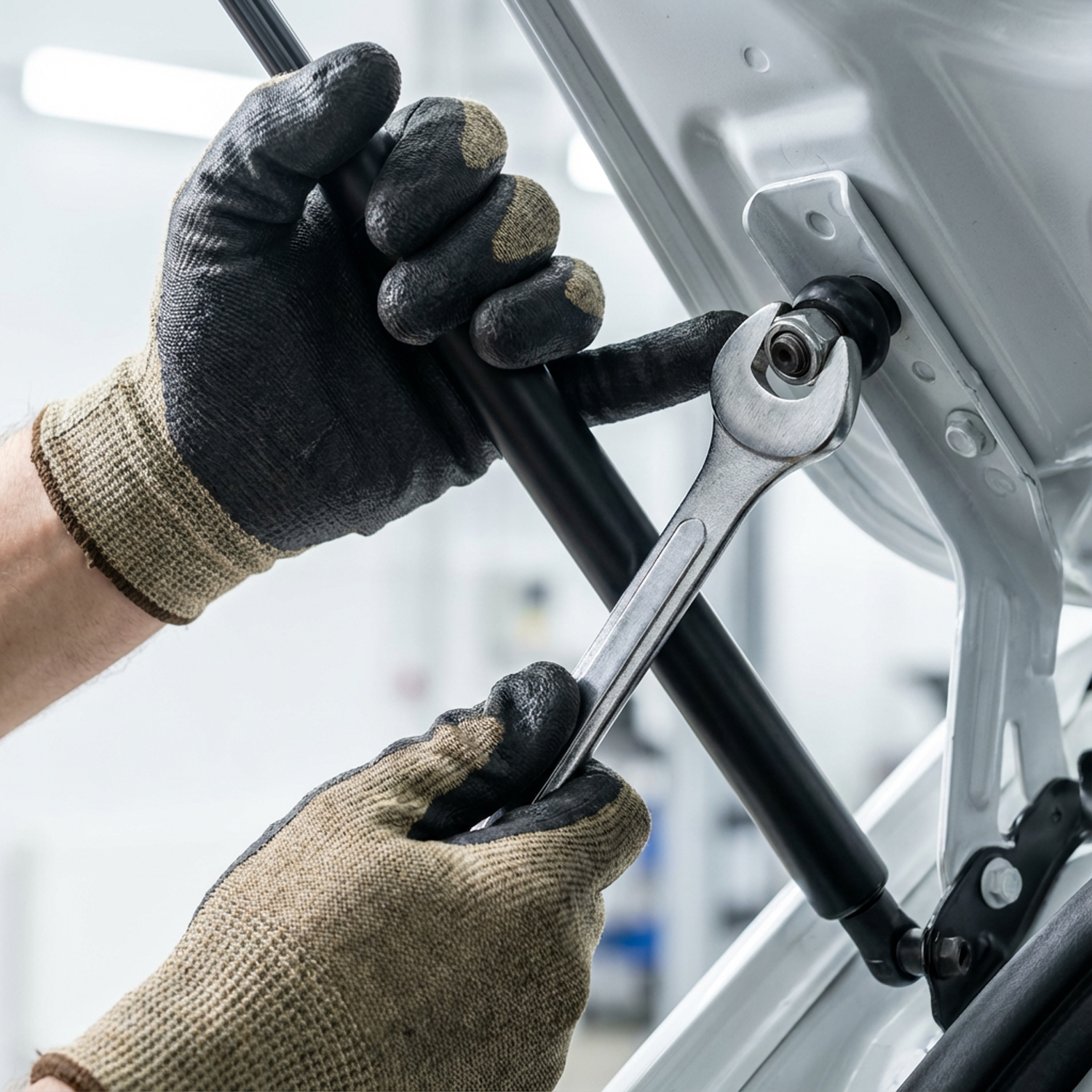
To ensure maximum lifespan and safety, please follow these installation guidelines carefully.
Gas springs contain nitrogen gas under high pressure. Do not attempt to open, cut, heat, or damage the cylinder. Do not expose to temperatures above 80°C. Disposal must be handled by professionals.
Always install with the piston rod pointing DOWN.
The internal seals of the gas spring must remain lubricated by the oil inside the cylinder. Installing the rod downwards ensures that the oil stays at the bottom (guide block), keeping the seal lubricated and preventing gas leakage.
Correct: Rod Down (Lubrication Active)
Incorrect: Rod Up (Seal dries out)
Illustration: Correct mounting position
Follow these steps to prevent premature failure.
Gas springs are designed for axial loads only. Ensure there is no bending or side-load (lateral forces) during operation. Use ball joints to compensate for slight misalignments.
The piston rod surface is critical. Do not paint, scratch, or clamp the rod with pliers. Any damage to the chrome surface will destroy the internal seal.
When screwing on eyelets or fittings, do not overtighten. Ensure the threads match perfectly. The rod should turn freely inside the cylinder (do not grip tightly).
Standard gas springs operate between -30°C and +80°C. Avoid installing near exhaust manifolds or heat sources unless using specialized high-temp seals.
If storing for long periods, keep the gas springs with the rod facing down. Actuate (compress) them at least once every 6 months to lubricate the seals.
Gas springs are maintenance-free. Do not oil or grease the rod externally. If the product loses force or leaks oil, it must be replaced.
Our engineering team can help you calculate the correct force and mounting points.
Contact Support
 Türkçe
 Español